My Favorite Sourdough Tools (And the Ones I Actually Use) {Part 1}
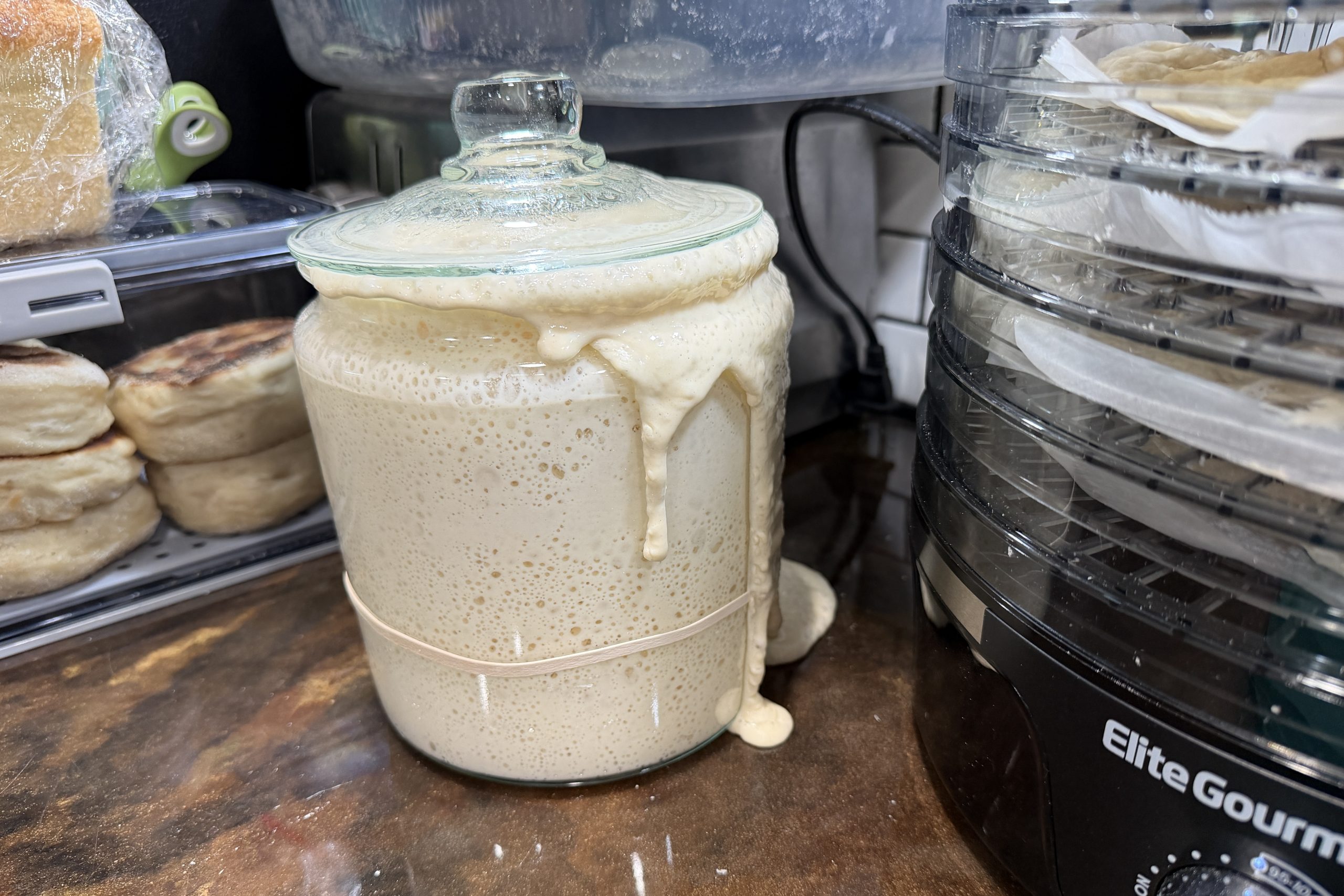
If there is one thing you will learn quickly once you start sourdough, it’s this:
Everybody has an opinion.
Actually… everybody has lots of opinions.
You’ll find people saying you absolutely NEED expensive equipment, people saying your dough should look a certain way, people insisting there is only one “right” method, and at least one person online who somehow makes sourdough look effortless while shaping a perfect loaf with acrylic nails and a white shirt on.
Meanwhile, the rest of us are over here with flour on our pants and starter dried onto the counter for the third day in a row.
This post is not me claiming to know everything about sourdough baking, because honestly? I don’t think anyone does. I’m still learning constantly, and I probably always will be. That’s part of what I actually love about sourdough — there is always something new to learn, tweak, test, or completely mess up and try again later.
What works for one person might not work for another. Your climate matters. Your flour matters. Your kitchen matters. Your schedule matters. Even your water can matter.
This is simply what works for me in my kitchen.
These are the tools I personally use, what I actually reach for regularly, and the things I think make sourdough less intimidating for beginners.
And before someone says it…
Yes, our grandmothers could eyeball ingredients.
But they also learned through years and years of experience. A beginner trying to “just feel it out” usually ends up frustrated because they don’t know what they’re looking for yet, so they ultimately quit.
Learn the basics first. Learn accuracy first. Then experiment later.
That’s why I firmly believe in kitchen scales. They take so much guesswork out of sourdough, especially when you’re new and already wondering if your dough is too wet, too dry, underproofed, overproofed, or personally offended by your existence. Some days I think it’s the later.
Sourdough can feel overwhelming at first, but I promise it gets easier.
If I can figure it out, so can you. Because I’ve been there. I’ve worn the shoes.
My Sourdough Philosophy
I like accuracy, but I also like realism.
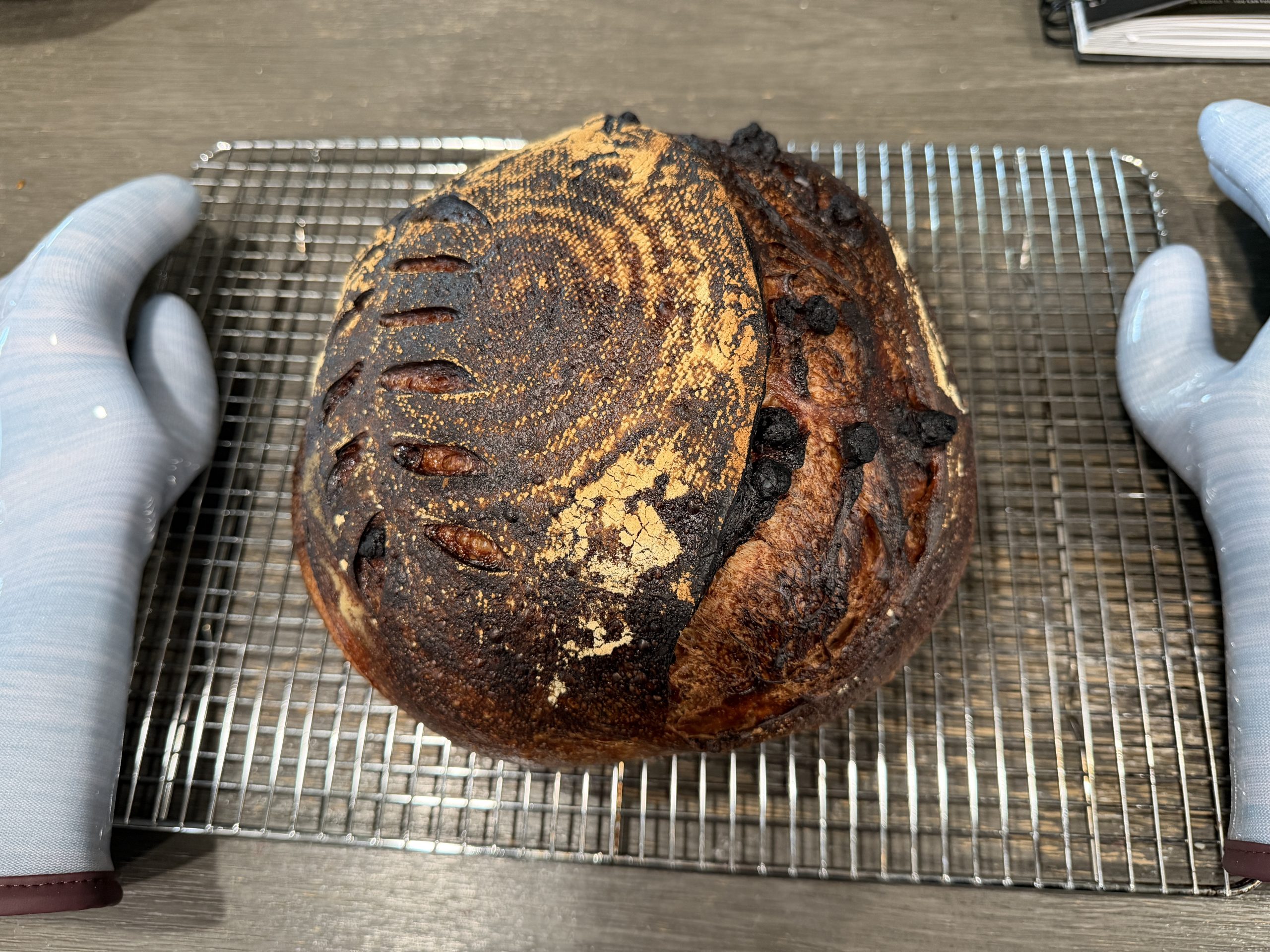
I love the idea of perfection, but my loaves usually come out rustic, uneven, flour-covered, and honestly? I’m learning to love that more than store-bought perfection anyway.
Sourdough has taught me that homemade things are not supposed to look factory-made.
And sometimes the “ugly” loaf tastes the best.
I’m also a big believer in learning as you go. I don’t think you need every gadget on the market before you start baking bread. Half the time, my best tool is literally my hands.
And the other half of the time, it’s coffee.
Meet My Starter: Snoop Dough
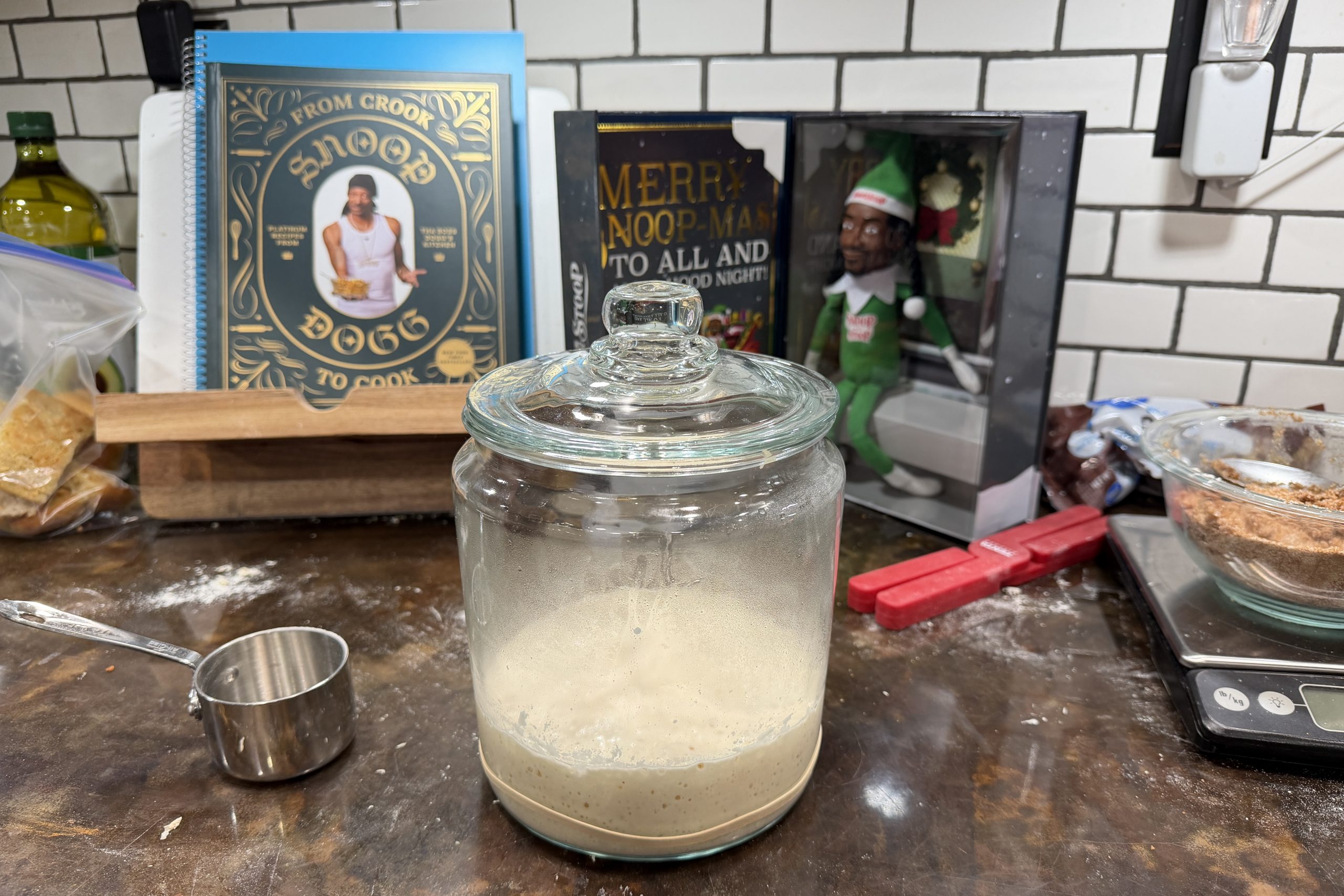
My sourdough starter is named Snoop Dough.
I wish I could say I came up with that myself, but a friend of mine named it when she gave me some starter, and honestly, the name stuck immediately.
At this point, Snoop Dough has become part of the kitchen.
I even bought the little “Snoop on the Stoop” figure and the Snoop Dogg cookbook because apparently, once you name your starter, you just fully commit to the bit.
No regrets.
My Most-Used Sourdough Tools
Kitchen Scale
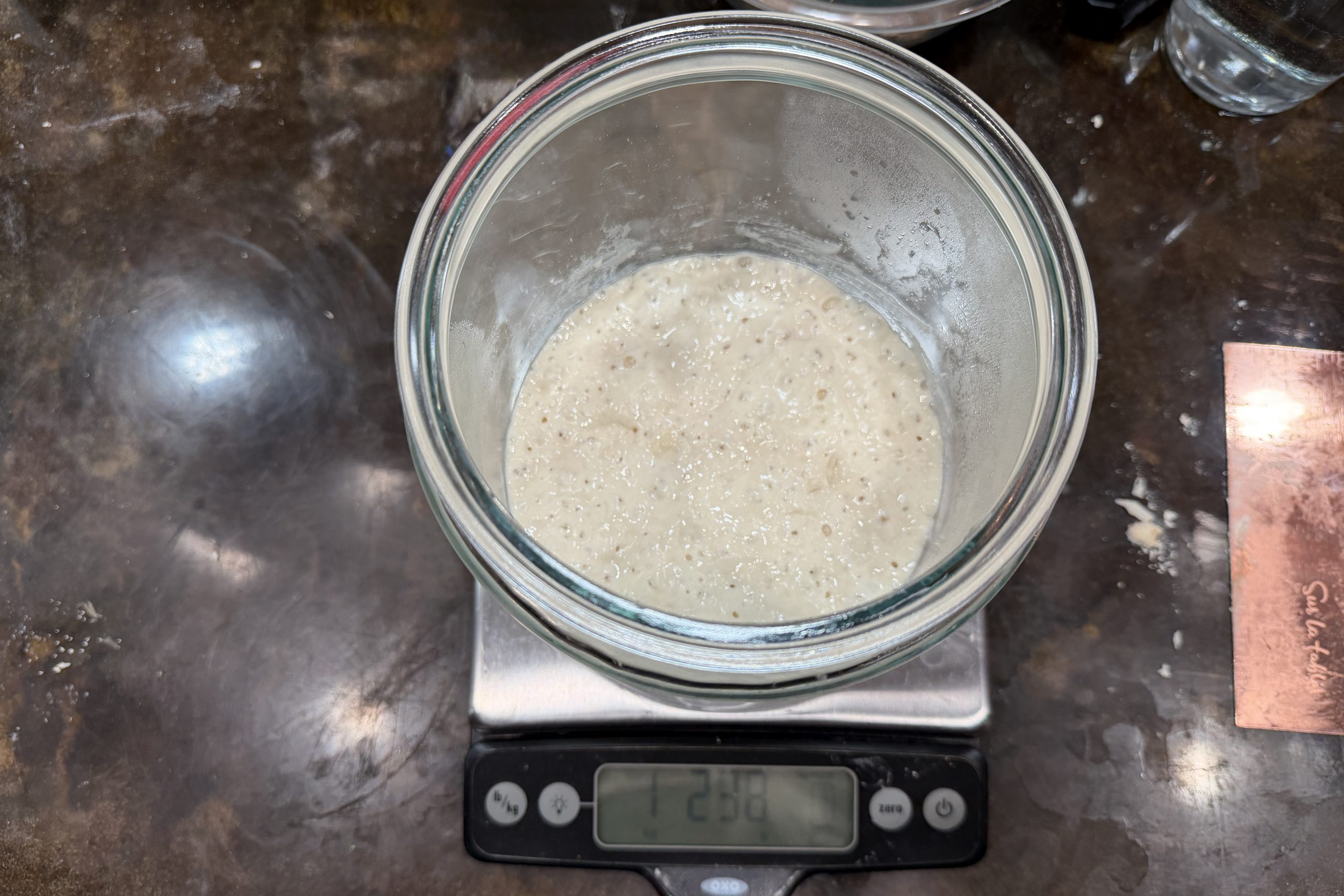
This is a bit controversial, but if I could only recommend ONE thing to a beginner, it would probably be a digital kitchen scale.
Not because measuring cups are evil. Not because you can’t eventually learn by feel.
But because consistency matters when you’re learning.
A scale helps you understand hydration, dough texture, ratios, and repeatability. If you make an amazing loaf, you actually know how to recreate it instead of standing in the kitchen going:
“I’m pretty sure I added… flour?”
And trust me, I say that from experience.
Starter Jars
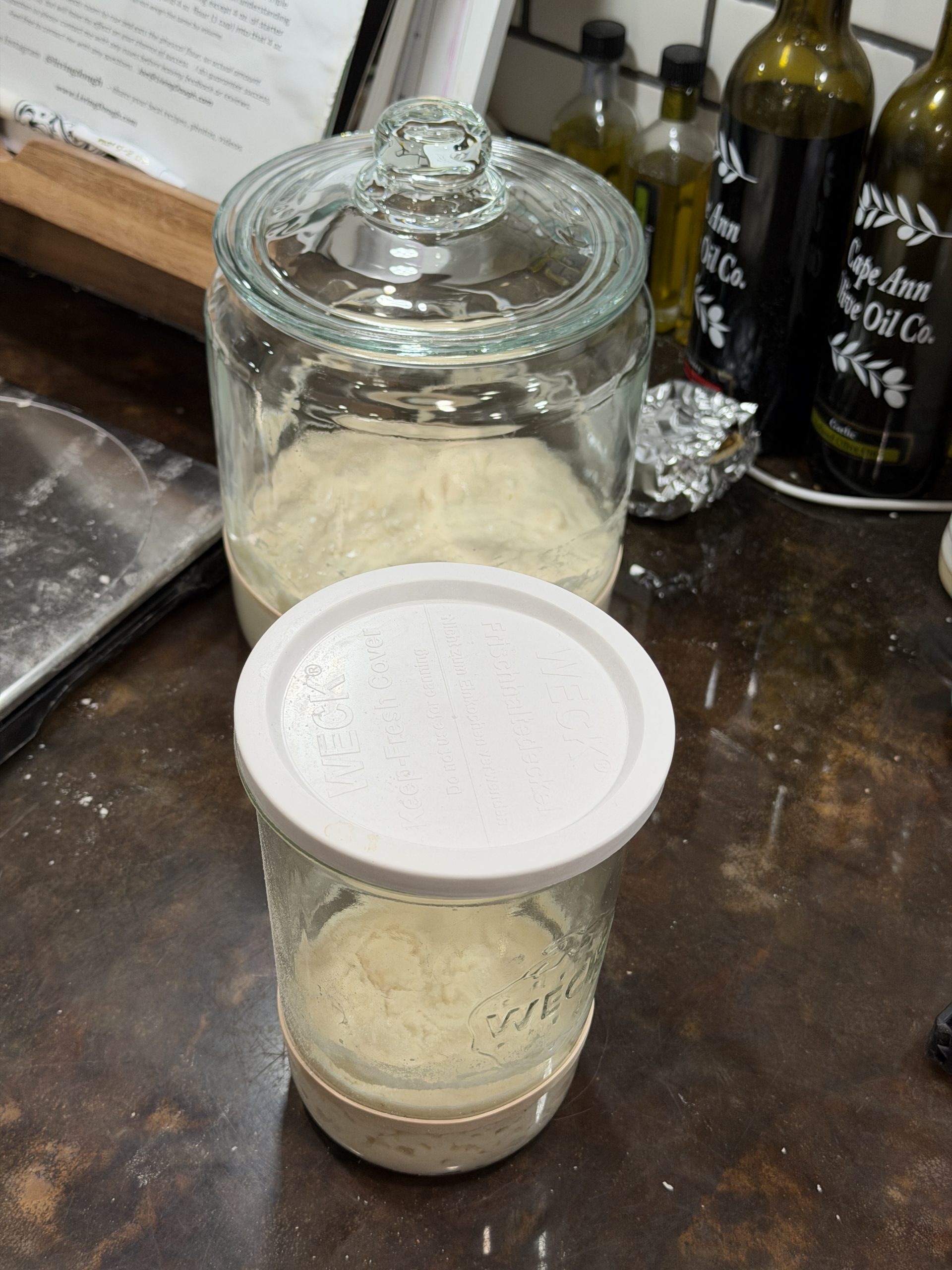
I mostly use mason jars for my starter, because they’re simple, affordable, and easy to clean.
My favorite is actually a half-gallon Anchor jar with straight sides. Straight-sided jars are SO much easier for tracking starter growth.
I also love my Weck jars, although I have absolutely overfilled smaller jars before and basically created a sourdough volcano situation.
At least twice, I’ve managed to stick starter to my kitchen wall.
So maybe don’t fill your jars quite as enthusiastically as I do.
Mixing Bowls
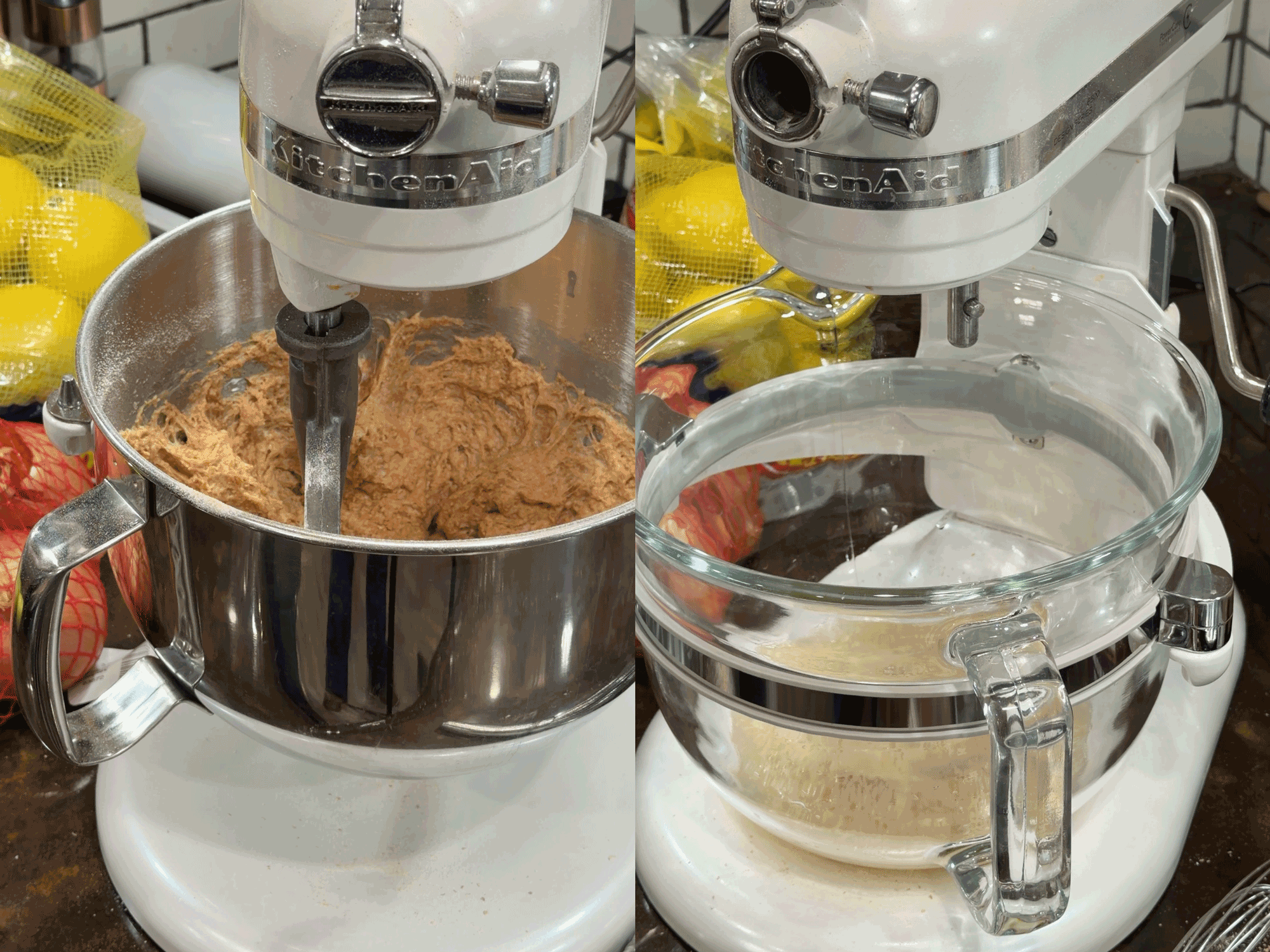
I am not loyal to one specific bowl. (Same mixer, 2 different bowls)
If a bowl speaks to me, I use it.
I have:
- KitchenAid bowls
- Pyrex bowls
- porcelain bowls
- random bowls I’ve collected over time
Honestly, if it can hold dough, it has potential.
One of my KitchenAid glass bowls literally fell off the counter while attached to the mixer and somehow survived, so points to KitchenAid for that honestly.
My Dutch Ovens
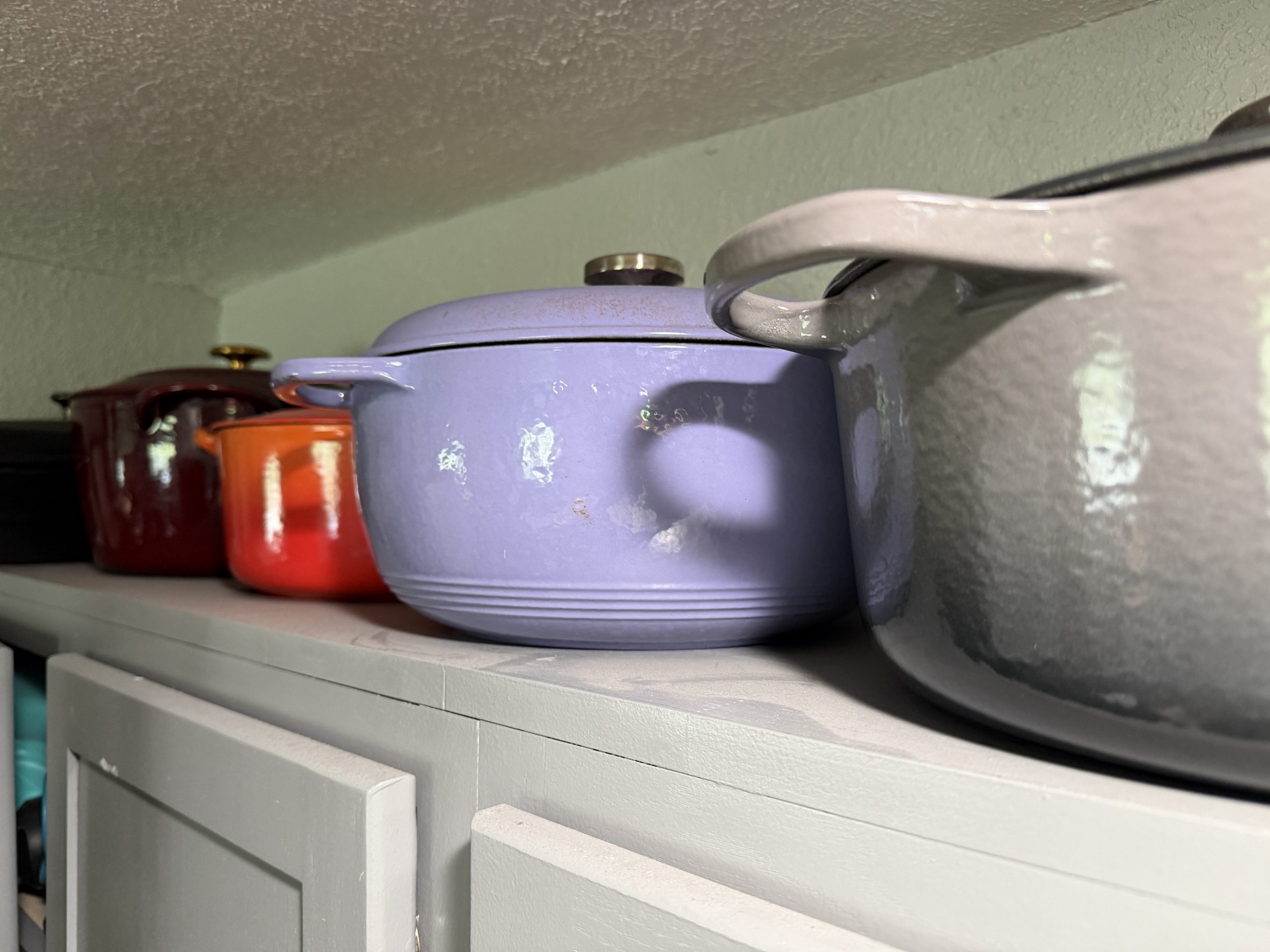
I regularly bake in:
- a Lodge 6qt Dutch oven
- a Le Creuset 7qt Dutch oven
- and a Gotham Steel lightweight enameled Dutch oven
And before anyone asks…
No, you do not need the most expensive option to make good sourdough.
Good bread can come out of a budget Dutch oven too.
Sourdough is a process, and honestly, so is learning how you bake best.
You do not need a perfect kitchen, expensive tools, or years of experience to start.
You just need patience, practice, and probably a bench scraper.
And maybe paper towels.
Definitely paper towels.
In Part 2, I’ll share more of my favorite tools, beginner tips, and the things I’ve learned the hard way so hopefully you don’t have to.
And yes, Snoop Dough will absolutely make another appearance.
