
Vampire Folklore
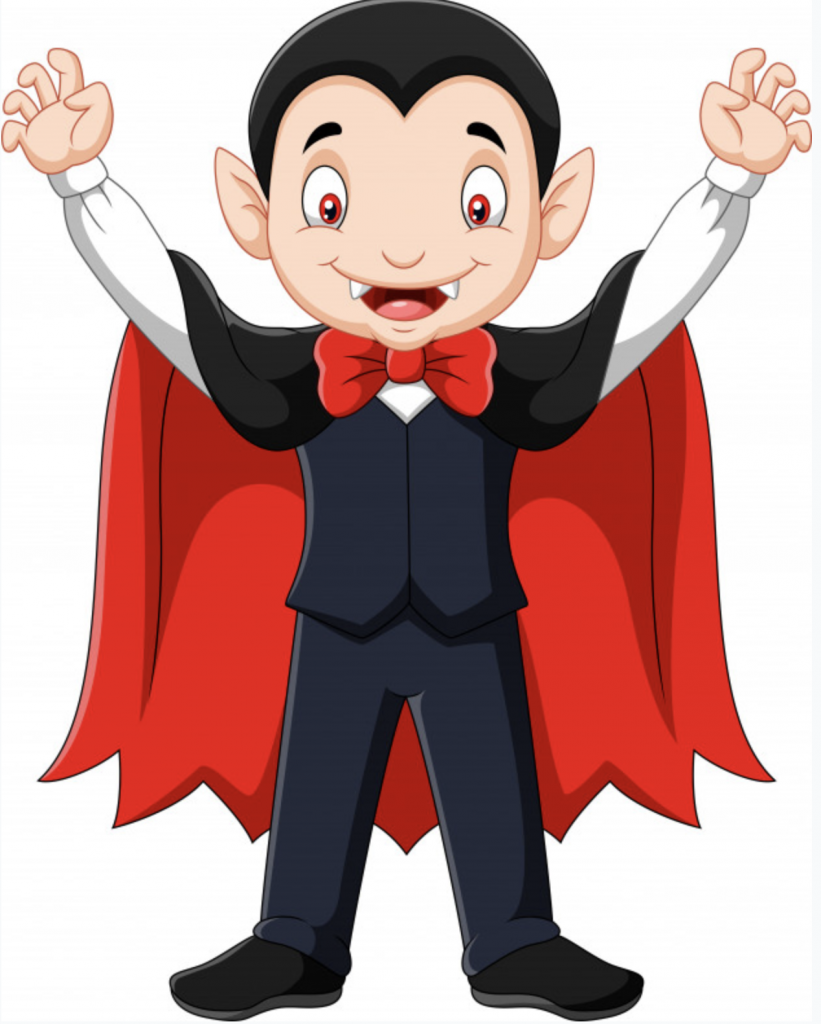
VAMPIRES
In vampire folklore, a vampire initially emerges as a soft blurry shape with no bones. He was “bags of blood” with red, glowing eyes and, instead of a nose, had a sharp snout that he sucked blood with. If he could survive for 40 days, he would then develop bones and a body and become much more dangerous and difficult to kill.
Today vampires are widely believed to be very old, tall, attractive, intelligent and aristocratic, sleep in coffins on native ground, have an insatiable thirst for blood, and who must be staked through the heart to be killed. In contrast, folkloric vampires (before Bram Stoker) are usually peasants of low intelligence, recently dead, do not need their native soil, and are often cremated with or without being staked.
Vampires have many powers; anything from telepathy and mind control to the ability to communicate with and/or transform into animals. While sunlight can be used by vampires to kill other vampires, in the novel “Interview with a Vampire”, other vampires such as Lord Ruthven and Varney were able to walk in daylight.
Vampires can become vampires not only through a bite, but also if they were once a werewolf, practiced sorcery, anyone who has eaten the flesh of a sheep killed by a wolf, was the child of a pregnant woman who was looked upon by a vampire, was a nun who stepped over an unburied body, had teeth when they were born, or had a cat jump on their corpse before being before being buried, a stillborn; a bat flying over a corpse; being the seventh son of the seventh son; a dead body that has been reflected in a mirror; red heads; people who were improperly buried.
If you are bitten by a suspected vampire, you should drink the ashes of a burned vampire. To prevent an attack, make bread with the blood of vampire and eat it. Things that repel vampires: churches; crucifixes; Eucharist water; garlic; holy water; thresholds (unless they’re invited in); mirrors; sunlight; fire. Methods of repelling vampires include garlic, hawthorn branches, rowan trees (used to make crosses), scattering of garlic seeds, fire, decapitation with a gravedigger’s spade, salt, iron, bells, a rooster’s crow, peppermint, running water, and burying a suspected vampire at a crossroads.
Garlic, a traditional vampire repellent, has been used as a form of protection for over 2,000 years. In several cultures, brides carried garlic under their clothes for protection from vampires. If vampires are a concern in the area in which you live, sprinkle garlic seeds on the roof of your house. It is an unwritten rule in vampire lore that when flying over a house if a vampire sees garlic seeds they must stop and count the seeds placing them in random piles of 15 until all the seeds are counted. When the morning sun rises, if the counting is not completed, the vampire will “melt” leaving a visible stain on the roof of the house thereby identifying the fact the vampire no longer exists (proof can be seen when traveling through the countryside as houses can be seen with stained roofs).
Here are a few vampire facts:
- Fact: Vampires live on blood.
- Fact: Vampires take on a darker color when they drink blood.
- Fact: Vampires do have weaknesses. They are not invincible. Some of the more common theories cited in legends include garlic, crosses, beheading, sunlight, stake through the heart, holy water, fire, poppy seed counting and of course werewolves.
- Fact: Not all vampires have fangs. Some of the earliest stories of vampires describe creatures that do not have the fangs that are so commonly depicted in vampires today.
- Fact: Humans are not the only vampires. There are a few vampiric animals that exist including some birds, bats, and fish.
- Fact: Humans have believed in vampires for centuries. Fact: In the Middle Ages especially, the belief in vampires was at a near panic level. Humans believed that the plague could be spread by vampires, so they would shove bricks into the mouths of dead corpses believed to be vampires.
- Fact: Dracula is a famous vampire novel, not a real person or vampire.
- Fact: In some cultures the Devil and the vampire are virtually interchangeable beings.
- Fact: A number of vampires that have banded together can be called a pack, a coven, or a clan.
- Fact: The question of whether or not vampires are real is universally debatable, but the fact is that there are a number of self-professed vampires, humans that truly claim to be vampires.
- Fact: Vampires are said to have no reflection.

A bloody cool post